

About the Interior Design Course
Embark on a transformative journey of creativity and innovation with the Bachelor of Design in Interior Design at the renowned Indus School of Design, the best university in Ahmedabad for design education. Our B.Des in Interior Design Program offers a comprehensive curriculum that blends theoretical knowledge with hands-on experience, equipping students with the skills and expertise needed to thrive in the dynamic field of Interior & Furniture Design. Through a fusion of traditional design principles and cutting-edge technologies, students are empowered to unleash their imagination and shape spaces that evoke emotions and inspire awe. Upon completion of this Bachelor Degree in Interior & Furniture Course, graduates emerge as adept Interior Designers, poised to revolutionize the industry with their unique vision and unparalleled craftsmanship. Join us and embark on a journey towards becoming a visionary Interior Designer, ready to leave an indelible mark on the world of design.

What You Must Learn To Become a Interior Designer?
Interior design courses address a variety of areas, including management, fittings, furniture design, and space utilization. It is a thorough course in Interior Design and Furniture Design that teaches students the finer nuances of using space in a beautiful and functional manner. Interior Designers construct safe, aesthetically pleasing, and functional interior settings by determining the appropriate amount of space and selecting crucial components and accent pieces such as colours, lighting, and materials. They must be able to read, alter, and draw blueprints. They also need to understand building laws, inspection procedures, and accessibility standards.
Key Learning Areas
1. Design Fundamentals: Understand design concepts, colour theory, and spatial arrangements.
2. Technical Skills: Learn to use industry-standard software for drafting and 3D modelling.
3. Material and Fabric Knowledge: Discover the many materials and fabrics used in interior design and learn how to choose them based on usefulness and beauty.
4. Project Management: Learn how to efficiently plan and execute interior design projects.
5. Architectural Drafting: Learn how to design exact and detailed architectural drawings, such as floor plans, elevations, and sections.
6. Spatial Planning: Learn the fundamentals of spatial organization, circulation, and zoning to improve the functionality and flow of indoor areas.
7. Sustainable Design Practices: Incorporate environmentally conscious design ideas, such as sustainable materials and energy-saving solutions, into your designs.
8. 3D Modelling and Visualization: Learn how to utilize 3D modelling software to produce realistic visualizations of interior spaces, allowing clients to see the finished design before it is implemented.
9. Rendering Techniques: Learn various rendering techniques, such as hand-drawing and digital rendering, to effectively communicate design concepts to clients and stakeholders.
10. Project Documentation: Master the skill of developing thorough project documentation, such as design briefs, specifications, and schedules, which is critical for successful project management.
Subjects of the Curriculum
At Indus, specializations offered are: Sustainable Interiors, Furniture Design, Exhibition Design, Set Design, Parametric Design, Lighting Design, Interior Decoration, and Interior Styling, Relationship b/w Architecture & Interior Design, Built (manmade) Environment. Along with this, Craft Study Documentation and Relative Study Program (RSP) enable our students to understand the traditional craft culture of India for creating simple, yet artistic and sustainable design strategies. Trend Forecasting Study essentially provides the current scenario of demand & marketing. It will be divided into the following subsets
- Software Study (CAD I II & III; 3ds Max; Adobe Suite)
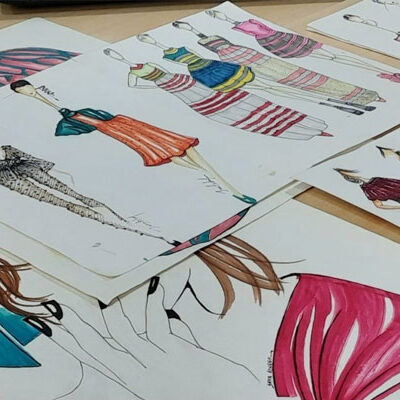
- Sketching & Rendering (manual & digital)
- Presentation Skills
- Graphical Skills
- Technical Representation Skills
- Construction & Technology I, II, & III
- Services I II & III
- Basic Structure I & II
- Basics of Design
- History of Interior Design
- Elements of Interior Design
- Design Process
- Design Methodology
- Colour Psychology
- Behavioral Psychology
- Conservation
- Climatology
- Thesis Orientation
- Professional Practice
- Estimating & Costing
- Practical Training
- Technical Drawing
- Technical Representation Drawing I & II
- Working Drawing
- Design Thinking
- Design Studio I II III & IV
- Basic Design I & II
- Furniture Design I & II
- Interior Landscape
- Generative Design
- Design Thesis
- Craft Documentation
- Related Study Program I & II
- Portfolio Development

Course Structure
- For creating harmonious interiors that convey character, study about the 7 principles of interior design: balance (symmetrical, asymmetrical, radial), unity, rhythm, scale and proportion, emphasis, contrast, and details.
- Technical and manual skills for illustrating, mapping, and 2D & 3D model rendering.
- Architecture & its relation with interior design.
- Built Environment and its importance in ID.
- Encouraging theoretical & practical knowledge, applying it in the real world.
- Building a network of markets, vendors and suppliers.
- Ability to develop diverse ideas aligned with the interests of the client.
- Multi-tasking and time management skills.
- Guiding students to develop strong interpersonal and leadership skills so that they can pitch their concepts and promote themselves to the customers.
- Conceiving distinct, visually & functionally appealing, sustainable ideas.
- Developing the capability to understand the human need for comfort and well-being in projects.
Career Paths
- Interior Designer
- Exhibition Designer
- Lightning Designer
- Furniture Designer
- Set Designer
- Colour Consultant
- Production Designer
- Space Designer
- Scenic Designer
B.Design Interior Design – Student FAQs Guide
B.Des in Interior Designing is a 4-year undergraduate program that teaches students how to design functional and beautiful indoor spaces. It is ideal for students who are creative, interested in space planning, colors, furniture, and architecture. If you are looking for design courses after 12th, this is one of the most popular choices in India.
To apply for B.Des admission 2026 India, students must:
- Pass 12th standard (any stream) from a recognized board
- Have a creative mindset and interest in design
Some interior designing colleges India may also conduct entrance tests or personal interviews.
If you are searching for a design institute in Ahmedabad, choose one that offers:
- Practical studio-based learning
- Experienced faculty
- Modern infrastructure
- Strong placement support
Indus Design School is among the top B.Des colleges in Ahmedabad focusing on both creativity and industry exposure.
Students learn a mix of creative and technical subjects such as:
- Space Planning & Layout Design
- Furniture Design
- Material & Lighting Design
- AutoCAD & 3D Software
- Design Theory & History
Top institutes offering hands-on design learning India ensure students work on real-life projects.
Yes, interior designing is one of the highest paying design careers in India. With growing demand in residential, commercial, and retail spaces, skilled designers are highly valued.
After completing the course, students can work as:
- Interior Designer
- Space Planner
- Furniture Designer
- Set Designer
- Visual Merchandiser
Graduates from a design college offering placement in India have better job opportunities and industry connections.
Yes, many private design colleges in India offer placement assistance. A good design college with placement helps students with:
- Internships
- Portfolio development
- Industry exposure
- Campus placements
The B.Des Interior Designing course is typically 4 years long, divided into 8 semesters, including practical training and internships.
Interior design is a practical field. Institutes that offer hands-on design learning India help students:
- Work on real projects
- Build strong portfolios
- Understand client requirements
This improves job readiness and creativity.
A top design institute Gujarat should offer:
- Industry-oriented curriculum
- Experienced mentors
- Modern labs and studios
- Placement support
It should also follow a strong design thinking institute India approach.
Interior Designing focuses on indoor spaces, aesthetics, and functionality, while Architecture deals with building structure and construction. If you are more interested in creativity and décor, Interior Designing is a better choice.
Yes, students from Science, Commerce, or Arts can apply. That’s why it is one of the most flexible design courses after 12th.
Key skills include:
- Creativity and visualization
- Communication skills
- Problem-solving ability
- Knowledge of design tools
Top interior designing colleges India help students develop these skills through practical learning.
Some private design colleges in India may ask for a basic portfolio or conduct a creative test. However, many institutes focus on student potential and creativity rather than prior experience.
Choosing a design college with placement in India ensures:
- Better career opportunities
- Industry exposure
- Faster job placement after graduation
It gives students a strong start in the competitive design industry.
Choosing a design college with placement in India ensures:
- Better career opportunities
- Industry exposure
- Faster job placement after graduation
It gives students a strong start in the competitive design industry.
Approximate fees:
- Around ₹3.18 lakh per year
- Total approx. ₹12.72 lakh for 4 years
(Fees may change—confirm with the institute.)