


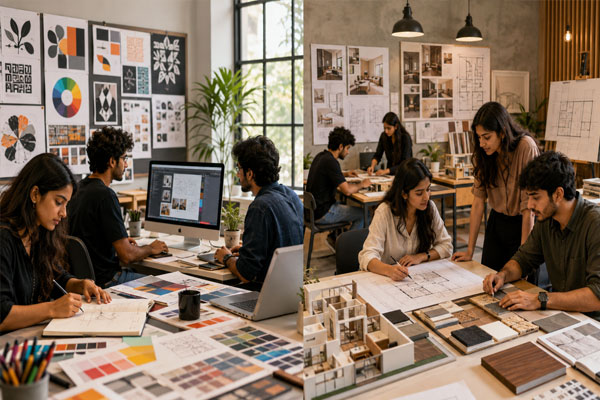
Communication Design Course in India
The creative industry in India offers growing opportunities for students interested in visual communication, digital media, branding, advertising, or interior spaces. Two popular study choices are a Communication Design Course India and a programme at a Top Interior Design Institute in India. Both fields combine creativity, research, technology, and practical problem-solving, but they lead to different career paths.
Understanding the subjects, eligibility, required skills, and job opportunities of each course can help students make a confident decision after Class 12 or graduation.
What Is a Communication Design Course
Communication design teaches students how to communicate ideas through visuals, words, digital interfaces, illustrations, photography, motion graphics, and branding. The main goal is to create messages that are clear, engaging, and suitable for a specific audience.
Students study colour theory, typography, layout, visual storytelling, photography, design research, and image creation. Many courses also include UI UX design, animation, packaging, advertising, video production, and social media communication.
A Communication Design Course India is ideal for students who enjoy creative thinking, storytelling, digital tools, and solving communication problems. It prepares them to work across print, digital, and interactive media.
Why Study Communication Design in India
India has active advertising, media, technology, entertainment, publishing, and ecommerce industries. Businesses in Ahmedabad, Mumbai, Delhi, Bengaluru, Pune, Hyderabad, Chennai, Jaipur, and other cities need skilled designers for branding, campaigns, websites, mobile applications, packaging, and digital content.
Studying communication design in India also helps students understand local languages, regional audiences, cultural diversity, and consumer behaviour. This knowledge is useful when creating visual communication for Indian users and businesses.
Graduates can work as graphic designers, brand designers, illustrators, UI UX designers, motion graphic artists, art directors, visual storytellers, and creative strategists. Freelancing and starting an independent design studio are also possible career paths.
What Is Interior Design Education
Interior design focuses on planning safe, functional, comfortable, and visually attractive indoor spaces. Students learn to design homes, offices, hotels, restaurants, shops, hospitals, exhibitions, and public environments.
A professional interior design programme covers space planning, furniture, materials, lighting, colour, construction methods, drafting, design software, sustainability, and project presentation. Students also learn how to understand client requirements, prepare design concepts, create technical drawings, estimate costs, and coordinate with contractors.
A Top Interior Design Institute in India should provide studio-based learning, experienced faculty, workshops, site visits, practical assignments, and portfolio development. These elements help students understand creative design as well as real project execution.
How to Choose the Right Interior Design Institute
Students should not select an institute only because of low fees or attractive advertisements. They should review its curriculum, faculty experience, studio facilities, software training, workshops, internships, placement support, and student portfolios.
A strong institute should teach design thinking, technical knowledge, project presentation, materials, construction, and professional communication. It should encourage original ideas instead of focusing only on software tools.
Location can also support practical exposure. Institutes in Ahmedabad, Mumbai, Delhi NCR, Bengaluru, Pune, Hyderabad, Chennai, and other developing cities may provide access to architecture firms, furniture markets, material suppliers, exhibitions, and design events. However, academic quality and industry support should remain the main priorities.
Communication Design and Interior Design Differences
Communication design focuses on messages, brands, visual media, and audience interaction. Interior design focuses on physical spaces, movement, materials, comfort, functionality, and user experience.
Communication design students may create logos, websites, advertising campaigns, packaging, illustrations, videos, and digital products. Interior design students may create floor plans, furniture layouts, lighting concepts, material boards, three-dimensional views, and technical drawings.
Both courses require creativity, observation, research, presentation skills, and attention to detail. Students who enjoy visual storytelling, branding, and digital media may choose communication design. Interior design may be more suitable for students interested in spaces, furniture, materials, lighting, and construction.
Career Scope in India
Communication designers can work with advertising agencies, technology companies, media houses, publishing firms, startups, and in-house creative teams. Interior designers can work with architecture studios, builders, furniture companies, hospitality groups, retail brands, or independent design practices.
With professional experience, designers can become design leads, consultants, project managers, creative directors, or business owners. The right course should help students build a strong portfolio, practical knowledge, communication skills, and professional confidence.
Whether you choose a Communication Design Course India or search for a Top Interior Design Institute in India, compare the quality of education, practical training, industry exposure, internship opportunities, and long-term career support before applying.
Eligibility and Admission Process
Most undergraduate design courses accept students who have completed Class 12 from a recognised board in any stream. Some institutes conduct entrance tests, creative assignments, portfolio reviews, or personal interviews. Postgraduate programmes may require applicants to hold a recognised bachelor’s degree.
A student portfolio can include sketches, photography, layouts, craftwork, digital art, models, or personal creative projects. It should demonstrate curiosity, observation, experimentation, and original thinking.
Frequently Asked Questions
Common subjects include graphic design, typography, branding, illustration, photography, advertising, motion graphics, UI UX design, digital media, and visual storytelling.
Students who have completed Class 12 from a recognised board can generally apply for an undergraduate communication design course. Admission requirements may vary between institutes.
Compare the curriculum, faculty experience, studio facilities, student portfolios, internships, practical projects, placement guidance, and alumni work before selecting an institute.
Yes. Residential, commercial, hospitality, retail, healthcare, and workplace projects create career opportunities for trained interior designers across major and developing Indian cities.
Basic drawing skills are helpful, but creativity, observation, visual thinking, research, storytelling, and communication abilities are equally important.
Choose communication design when you are interested in branding, visual media, advertising, and storytelling. Choose interior design when you are interested in spaces, furniture, materials, lighting, and planning.