


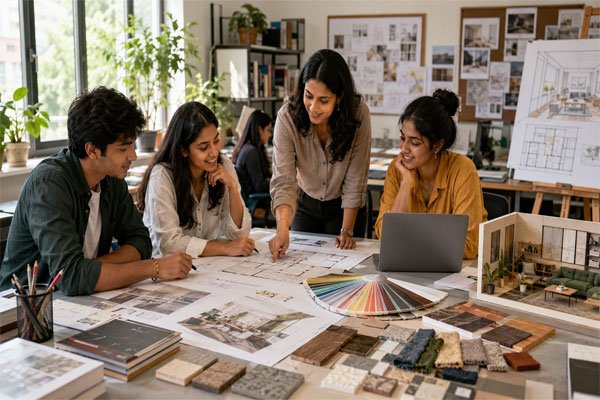
Bachelor of Interior Design: Careers and Scope
Interior spaces influence how people live, work, learn, shop, and relax. A thoughtfully designed space is not only visually attractive but also comfortable, functional, safe, and suitable for its purpose. Students who enjoy creativity, planning, colours, furniture, architecture, and space management can consider pursuing a Bachelor of Design in Interior Design.
This undergraduate programme helps students understand the complete process of designing residential, commercial, hospitality, retail, healthcare, and workplace interiors. It combines creative thinking with technical knowledge, preparing students for professional opportunities in India and abroad.
What Is Bachelor of Design in Interior Design
A Bachelor of Design in Interior Design is an undergraduate degree that focuses on planning, designing, and improving interior environments. The course teaches students how to transform empty or existing spaces into practical and visually appealing interiors.
Students learn about space planning, furniture design, materials, lighting, colours, construction methods, building services, technical drawing, and design software. They also work on practical assignments that help them understand how interior design projects are developed from the first idea to final execution.
The programme usually includes classroom learning, studio work, workshops, site visits, internships, presentations, and portfolio development.
Subjects Covered in the Interior Design Course
The curriculum may differ between colleges, but most Bachelor of Design in Interior Design programmes cover important creative and technical subjects.
Common areas of study include:
- Fundamentals of interior design
- Design principles and elements
- Space planning
- Technical drawing
- Furniture design
- Building materials and finishes
- Interior construction
- Colour theory
- Lighting design
- Building services
- Computer aided design
- Three dimensional visualisation
- Sustainable interior design
- Estimation and costing
- Professional practice
- Design research
- Portfolio development
These subjects help students understand both the appearance and practical performance of an interior space.
Why Choose Bachelor of Design in Interior Design
The demand for well-designed interiors is growing because people now give greater importance to comfort, functionality, sustainability, and personal style. Homes, offices, hotels, restaurants, hospitals, schools, retail stores, and public buildings require skilled interior designers.
A Bachelor of Design in Interior Design allows students to turn their creative interests into a professional career. It also develops problem-solving, communication, research, technical, and project management skills.
Students can explore different areas of interior design instead of limiting themselves to residential projects. They may work in commercial design, furniture design, exhibition planning, visual merchandising, hospitality interiors, sustainable design, or design consulting.
Skills Developed During the Programme
Successful interior designers need more than artistic ability. They must understand client requirements, construction limitations, budgets, materials, safety standards, and project deadlines.
During the Bachelor of Design in Interior Design programme, students develop skills such as creative thinking, sketching, visual presentation, space utilisation, material selection, and design communication. They also learn to prepare layouts, mood boards, working drawings, furniture plans, lighting plans, and digital presentations.
Teamwork is another important part of the course. Interior designers often coordinate with architects, contractors, carpenters, electricians, plumbers, vendors, and clients. Clear communication and proper planning are therefore essential for completing projects successfully.
Career Opportunities After Interior Design Graduation
Graduates can work with interior design studios, architecture firms, construction companies, furniture manufacturers, real estate developers, retail brands, hotels, event companies, and design consultancies.
Popular career options include:
- Interior designer
- Residential interior designer
- Commercial interior designer
- Furniture designer
- Space planner
- Exhibition designer
- Retail designer
- Lighting designer
- Visual merchandiser
- Design consultant
- Interior stylist
- Three dimensional visualiser
- Set designer
- Project coordinator
Experienced professionals may start an independent design studio or provide freelance interior design services. Graduates can also pursue postgraduate studies in interior design, furniture design, architecture-related studies, sustainable design, or design management.
Eligibility for Bachelor of Design in Interior Design
Students who have completed Class 12 from a recognised education board can generally apply for this programme. Applicants from science, commerce, and arts backgrounds may be eligible, depending on the admission requirements of the institution.
Some colleges offer admission based on Class 12 marks, while others conduct entrance examinations, portfolio reviews, aptitude tests, or personal interviews. Students should check the latest eligibility criteria of their preferred college before applying.
Creativity, observation, interest in design, basic drawing ability, and a willingness to learn technical concepts can help students perform well in the course.
Scope of Interior Design in India
Interior design offers strong career potential across India. Rapid urban development, new housing projects, office expansion, hospitality growth, retail development, and increasing renovation activity have created a need for qualified designers.
Major cities such as Ahmedabad, Mumbai, Delhi, Bengaluru, Pune, Hyderabad, Chennai, Jaipur, and Surat offer opportunities in residential and commercial interior design. However, demand is also increasing in smaller cities as homeowners and businesses seek professional design services.
Designers who understand local lifestyles, climatic conditions, materials, budgets, and cultural preferences can create more practical solutions for different regions.
Importance of Portfolio and Practical Experience
A strong portfolio is one of the most important requirements for beginning a career in interior design. It shows a student’s creativity, technical ability, design process, and presentation skills.
Students should include sketches, layouts, furniture concepts, material boards, digital models, working drawings, and completed projects in their portfolios. Internships and site visits can also provide practical knowledge about measurements, materials, construction work, vendor coordination, and project execution.
Employers generally prefer candidates who can clearly explain their design decisions and demonstrate both creative and technical abilities.
Conclusion
A Bachelor of Design in Interior Design is suitable for students who want to build a creative career while solving practical space-related problems. The programme provides knowledge of planning, materials, furniture, lighting, construction, technology, and professional design practices.
With proper training, practical experience, software skills, and a well-developed portfolio, graduates can find opportunities in several design industries. The course can also provide a foundation for freelancing, entrepreneurship, specialised study, and long-term growth in the interior design profession.
Frequently Asked Questions
It is an undergraduate design programme that teaches students how to plan, design, decorate, and improve residential and commercial interior spaces.
The programme is commonly completed over four years. However, course duration and academic structure may vary between institutions.
Yes. Students from commerce, arts, or science backgrounds can generally apply after completing Class 12, subject to the college’s eligibility requirements.
Basic drawing ability is helpful, but students can improve their sketching and presentation skills during the course. Creative thinking and observation are equally important.
Interior design students commonly learn drafting, modelling, rendering, and presentation software. The exact software taught may vary according to the institution and curriculum.
Graduates can work as interior designers, furniture designers, space planners, visualisers, retail designers, lighting designers, interior stylists, or project coordinators.
Yes. After gaining practical knowledge and industry experience, graduates can work as freelancers, consultants, or establish their own interior design studios.
Interior design can be a promising career because of increasing construction, renovation, real estate, hospitality, retail, and commercial development across Indian cities.