

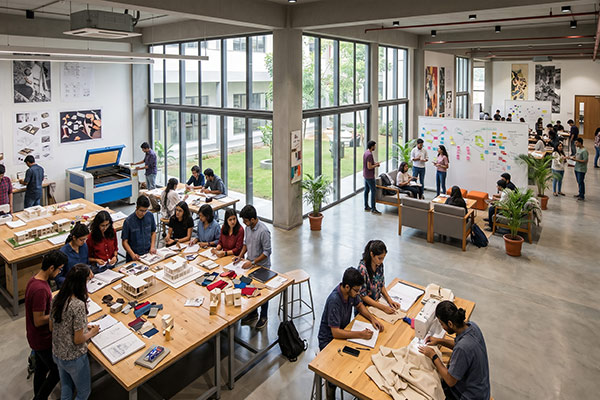
Indus B.Des: A Year-by-Year Guide
Choosing where to study for four years is one of the biggest decisions of your life. You want to know: What will I actually learn? What will my days look like? What kind of designer will I become? What can I do after I graduate?
This guide gives you an honest, detailed look at what studying a Bachelor of Design (B.Des) at Indus Design School is really like, from day one to graduation day and beyond.
What Is B.Des?
B.Des stands for Bachelor of Design. It is a four-year undergraduate degree programme specifically designed to train professional designers. Unlike an arts degree or an engineering degree, a B.Des is completely focused on design thinking, design skills, and design practice.
At the end of four years, you are not just someone who can make pretty things. You are a trained design professional who can understand user needs, research problems deeply, generate creative solutions, and deliver finished design work.
Specialisations at Indus Design School
After your common foundation year, you choose a specialisation. At Indus Design School, the main specialisations are:
| Specialisation | What You Will Design | Who It Is For |
| Communication Design | Logos, brand identities, campaigns, posters, digital content | Students who love visual storytelling and branding |
| Fashion Design | Garments, accessories, textile collections, fashion campaigns | Students passionate about clothing, culture, and style |
| Interior Design | Residential and commercial spaces, furniture, exhibition designs | Students who love transforming spaces and architecture |
| Product Design | Consumer goods, furniture, industrial tools, lifestyle products | Students interested in how everyday objects are made and improved |
Year 1: Foundation Year — Finding Your Design Eyes
The first year is the most exciting and the most challenging. You do not specialise yet. Instead, you build the fundamental skills that all good designers need, no matter what they go on to design.
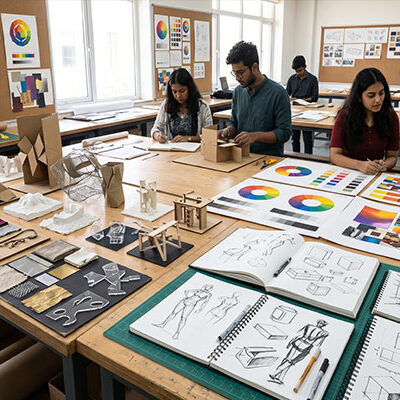
What You Study in Year 1
- Design Fundamentals: Line, shape, form, colour, texture, space, balance, rhythm
- Design Drawing: Observational sketching, perspective drawing, figure drawing, architectural drawing
- Material Exploration: Working with paper, clay, fabric, wood, metal, and found materials
- Colour Theory: Colour systems, harmony, contrast, cultural associations of colour
- Design History: From ancient India to the Bauhaus to today’s design trends
- Design Thinking: How to define problems, research users, and create solutions
- Craft Study: Documenting traditional Indian craft forms and understanding their design language
What Makes This Year Special: You will try multiple disciplines before choosing one. This gives you a real understanding of where your strengths and interests lie.
Year 2: First Steps in Your Specialisation
The first year is the most exciting and the most challenging. You do not specialise yet. Instead, you build the fundamental skills that all good designers need, no matter what they go on to design.
- Introduction to industry-standard software for your field
- User research basics: How to observe, interview, and understand your design audience
- Project documentation: Learning to record your design process professionally
- Workshop skills: Hands-on making with relevant materials and tools
- Guest lectures from working designers in the industry
- Typography: Letterform anatomy, type systems, editorial layout
- Visual Identity: What makes a brand recognisable and trusted
- Print Design: Magazine layouts, poster design, packaging
- Introduction to Digital Design: Websites, social media design
- Garment Construction: Pattern making, draping, sewing techniques
- Textile Science: Fabrics, fibres, weaves, surface treatments
- Fashion Illustration: Drawing for the fashion industry
- Trend Research: How fashion trends start and travel globally
- Space Planning: How to organise a room for both function and beauty
- Technical Drawing: Floor plans, elevations, sections
- Materials and Finishes: Flooring, walls, ceilings, furniture
- 3D Software Introduction: SketchUp, basic 3ds Max
- Form and Material Studies: How form and material work together in product design
- Prototyping Basics: Building rough models of product ideas
- User-Centred Design: How to design products that fit human bodies and behaviours
- Introduction to CAD: Basic 3D modelling software
Year 3: Industry Projects and Real-World Challenges
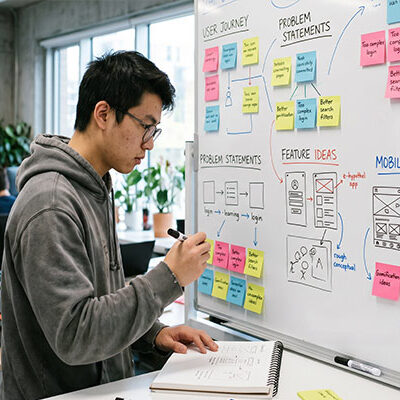
Year 3 is where your education gets real. You work on larger, more complex projects. Many of these are based on real industry briefs, actual problems that real companies need solved.
Key Activities in Year 3
- Industry Collaboration Projects: Work directly with companies on real design problems
- Community and Social Design Projects: Design for real communities and social challenges
- Advanced Software Training: Master the tools of your specialisation
- Field Research: Go out into the field to observe and interview real users
- Internship Preparation: Build your portfolio, learn professional communication, prepare for your internship
TIP: Year 3 internships are one of the most valuable parts of your design education. Choose your internship company carefully. Pick a studio or brand where you will learn the most, not necessarily the most famous name.
Year 4: Your Thesis and Graduation Project
The final year is dominated by your thesis project. This is the most important project of your design education. It is entirely your own. You choose the problem. You do the research. You design the solution. And you present it to an expert jury.
What Makes a Good Thesis Project?
- It solves a real problem for real people
- It is based on thorough research and user understanding
- It shows your unique design voice and perspective
- It is professionally executed and documented
- It is something you genuinely care about
Examples of Strong Thesis Project Areas
- A brand identity system for an underserved Indian craft community
- A product design solution for the elderly using Indian ergonomic principles
- An interior design concept that blends traditional Gujarati architecture with modern use
- A fashion collection inspired by the textile traditions of a specific Indian region
- A communication design campaign addressing a real social issue in India
Life Outside the Classroom
Design education at Indus Design School is not just about classes. There is a rich culture of learning that happens outside formal lectures.
- Design exhibitions and critiques where students present work publicly
- Workshops led by visiting designers from India and internationally
- Field trips to craft villages, exhibitions, factories, and design studios
- Design competitions at the national and international level
- Design fairs and product showcases where student work reaches real audiences
- Collaborative projects between different design specialisations
What Career Can You Have After B.Des?
A B.Des degree opens many doors. Here is what Indus Design School graduates typically go on to do.
| Career Path | Examples of Roles | Sectors That Hire |
| Employment as a Designer | Junior Designer, Design Executive, Brand Designer | Agencies, tech companies, fashion brands, interior firms |
| Higher Education | M.Des in India or abroad | NID, IIT, international design schools |
| Entrepreneurship | Starting a design studio, fashion label, or product company | Self-funded or investor-backed |
| Freelancing | Independent design consultant | Multiple clients across industries |
| Design Research | Research roles at design institutes or companies | Academic, corporate R&D, think tanks |
| Teaching | Faculty at design colleges after M.Des | Design education sector |
Frequently Asked Questions
You can apply for B.Des from any stream. Science, commerce, and arts students are all eligible. What matters is your passion for design and your creative aptitude.
This depends on the college’s policy, but many design programs allow students to switch specialisations before finalising in Year 2, especially after the common foundation year.
For most design specialisations, a MacBook or a Windows laptop with a dedicated graphics card works well. At minimum, you need 16GB RAM and a good quality screen. Your college may have specific recommendations based on the software used in your specialisation.
Yes. Indus Design School is part of Indus University, which is UGC-recognised and NAAC accredited (B++ grade). The B.Des degree is valid for higher education and employment in India and internationally.
Indus Design School maintains small batch sizes to ensure students get personal attention from faculty. Design education requires one-on-one feedback, and the small batch approach ensures every student gets that.
Yes. Indus University offers various scholarships based on merit and financial need. Contact the admissions office directly for details on current scholarship opportunities.
Very important. Your thesis project is usually the centrepiece of your portfolio. It is the project that shows employers what you are capable of when given complete freedom and responsibility. Put your best effort into it.